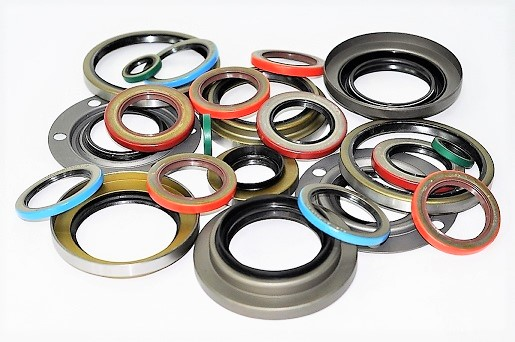
Oil seals are vital to the daily operation of most factories and a wide range of industrial and commercial equipment. They are available in metric and inch dimensions for both single- and double-lip design. Rainbow carries an immense variety of seals for use in rotary and shaft solutions. These include oil seals, grease seals, shaft seals and mechanical seals. Seals are available in several different configurations including, but not limited to: single lip or double lip, with or without a spring, as well as a two spring lip format.
Oil Seals by Size – Industrial Selection and Metric Oil Seals FAQs | Rainbow Precision Products
1. In oil seals, what size are there when used in industry?
Oil seals by size Oil seals are categorized as shaft seals by inner and outer diameter and the width so that they can fit properly, prevent leakage, and be reliable in their operation.
2. What are the measurements of oil seals?
Oil seal measurement: to measure the size of an oil seal, shaft diameter, bore diameter of a housing, and seal thickness are usually checked with calipers and company tolerance charts, and then ordered.
3. What are metric oil seals? What are they the size and what do they do?
Metric oil seal by size Oil seals of a standard size are in millimeter dimensions, and are frequent in international machinery standards, such as gearboxes, motors, pumps, and hydraulic equipment.
4. What is the importance of size selection in correct oil seals of equipment life?
Correct oil seals - by size selection avoid leakage of lubricant, shaft wear, ingesting contamination and stable operation within rated pressure and temperature.
5. Is the size of oil seals standardized avoids manufacturer to manufacturer?
Oil seals The size of the seal is usually international, but the material used and the shape of the lip may be different, and the construction of the casing is not always the same, so consult cross-species before changing.
6. When ordering oil seals by size what are the materials that we have?
Oil seals depending on their size include materials such as nitrile, FKM, silicone and Pt-FE which are selected depending on the temperature, when it is exposed to chemicals or is rotating.
7. What are the differences between metric and inch sized oil seals?
Both metric oil seals of sizes and inch-based seals of size are millimeter-dimensional and ISO-toleranced, with the latter needing additional conversion to prevent misfit problems.
8. How often should oil seals by size be changed in the rotating equipment?
Size The oil seals must be changed when leakage, lip hardening, shaft scoring, or contamination is observed, or when changing the oil seals is a part of the routine preventive maintenance of rotating assemblies.
CLICK TO NARROW RESULTS
NARROW RESULTS
NARROW RESULTS
Our website uses cookies. For more information on our cookie use, see our Privacy Policy. By continuing to use this website you agree to our use of these cookies.