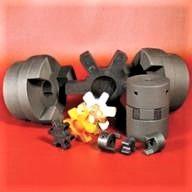
Jaw couplings are manufactured with a finished bore and are machined from bar steel with standard key seats and hollow head set screw.
Jaw Couplings Also known as Lovejoy couplings, these have a spider-shaped cushion between two hubs to reduce shock and handle minor shaft misalignment. To create a complete coupling, order two coupling hubs and one spider.
Buna-N spiders provide good vibration damping and chemical resistance.Temperature range is -40° to 212° F.
Jaw Couplers FAQs for Industrial Power Transmission | Rainbow Precision Products
1. How do you use a jaw coupler in the medium?
A jaw coupler is an assembly that uses a brace of shafts to transfer the necklace and allow the shafts to slide past each other, reducing vibration and guarding the ministry in artificial power transmission systems.
2. What are the types of jaw coupling generally available?
The type of jaw coupling include normal jaw, essence jaw, elastomeric spider type or torsionally flexible type, depending on the necklace needs, the capability to tolerate misalignment, and the working terrain.
3. What are the right jaw couplers sizes?
The sizes of jaw couplers are determined according to shaft diameter, torque rating, diameter of hub bore and keyway sizes to provide a proper fit and assure safe and reliable transmission of torque.
4. Which areas have jaw couplers close around me?
The industrial suppliers can be used to get jaw couplers that are compatible with shaft size, torque needs, and type of coupling that will be required by machinery.
5. Which are the materials used to produce jaw couplers?
Hubs can be of steel, aluminum, or stainless steel and use elastomeric or polymer spiders to eliminate any shock and minimize vibration in rotating machinery.
6. What happens with misalignment of shafts in jaw couplers?
Jaw couplers internalize angular, parallel, and axial misalignment with the elastomeric flexible element eliminating stress on shafts and wear on mating components.
7. At which point in time should jaw couplers be changed in machinery?
Change jaw couplers when the elastomeric spider has been identified to crack, wear or be deformed, or the hubs are noticed to be misaligned or vibrate excessively during the transfer of torque.
8. Do jaw couplers work with high speed industry?
Jaw couplers can also be used in high speed applications provided they are rated at the operating RPM, the torque load, and the environmental conditions of the manufacturer.
9. Question: What is the effect of jaw couplers in cutting down vibration to power transmission?
Jaw couplers: These minimise the effects of vibration by incorporating flexible elastomeric components that absorb shocks, torsional chattering and preserve connected shafts and machine components.
10. Is compatibility between jaw couplers and shafts of other types?
Jaw couplers Jaw couplers can be used on both solid and keyed shafts provided the sizes are matched with the right one to be used, they can provide flexible and secure transmission of torque across different arrangements in industry.